
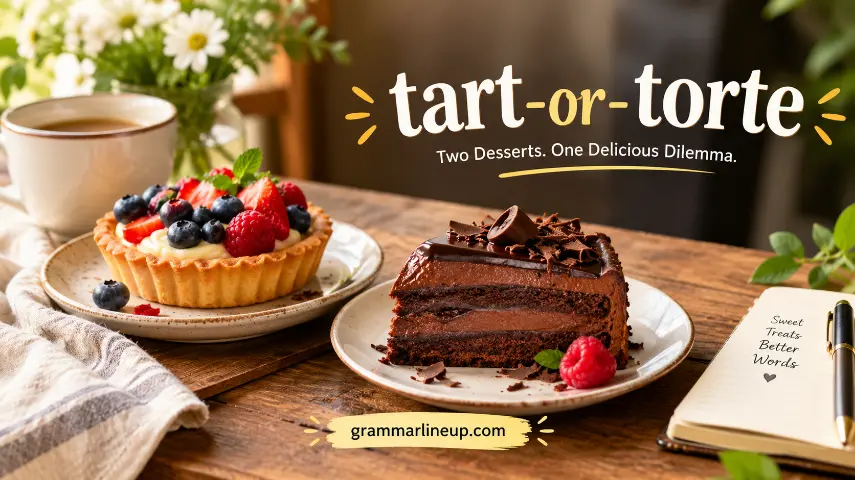
Have you ever looked at a dessert menu and wondered whether a tart and a torte are actually the same thing? The words sound similar, and both can describe delicious baked desserts, but they are not interchangeable. Each has its own traditional meaning, and knowing the difference can make recipes, menus, and everyday conversations much easier to understand.
A tart is generally an open pastry with a firm crust and a filling that is usually baked or added afterward. It can be sweet or savory, with familiar varieties including fruit tarts, lemon tarts, and vegetable tarts. A tart typically has no pastry covering the top.
A torte, on the other hand, is usually a rich, layered cake or a dense cake-like dessert. The term comes from European baking traditions and is especially associated with elaborate cakes made with ingredients such as chocolate, nuts, fruit, cream, or jam.
So, while both may appear on the same dessert table, they represent different styles of baking. In this guide, we’ll explore tart or torte, explain what each word means, look at their key differences, and show you how to use them correctly in everyday English.
Tart and torte are different types of baked desserts. A tart is usually an open pastry with a filling, often fruit, custard, or jam. A torte is a rich, usually round cake that may contain cream, chocolate, fruit, or nuts. If you mean an open pastry shell with filling, use tart. If you mean a layered or rich cake, use torte.
😉If you have ever paused over a menu and wondered whether the dessert should be called a tart or a torte, you are not alone. The words look and sound similar, but they refer to different kinds of desserts.
The easiest way to remember the distinction is this:
Tart = open pastry with a filling.
Torte = rich cake.
There is some variety in how individual recipes are made, so the distinction is not simply about one ingredient or exact shape. But the basic difference is reliable and useful in everyday English.
Tart vs. Torte at a Glance
| Word | Basic meaning | Typical structure | Common examples |
|---|---|---|---|
| Tart | An open pastry with a filling | Pastry shell, usually open on top | Fruit tart, lemon tart, custard tart |
| Torte | A rich cake | Cake-like layers or a substantial cake | Chocolate torte, almond torte, fruit torte |
A tart generally has a pastry shell that holds the filling. The filling may be sweet, and tarts can also be savory.
A torte, by contrast, belongs to the cake family. It is often rich and may contain cream, chocolate, fruit, nuts, or other fillings.
Oxford defines a tart as an open pie filled with sweet food such as fruit, while its definition of torte describes a large cake filled with ingredients such as cream, chocolate, or fruit. Cambridge similarly describes a tart as an open pastry case with a filling and a torte as a round, flat sweet cake.
What Does Tart Mean?
Tart is a noun when it refers to a type of food.
A culinary tart is an open pastry containing a filling. Fruit is especially common, but tarts can contain custard, chocolate, jam, vegetables, cheese, or other ingredients.
For example:
- We had an apple tart for dessert.
- She made a lemon tart for the dinner party.
- The bakery sells strawberry tarts.
- I ordered a custard tart with coffee.
The defining idea is the open pastry structure. Unlike a traditional covered pie, a tart generally does not have a pastry layer covering the filling.
Tarts can vary considerably in size and style. Some are large enough to serve several people, while small versions are called tartlets. Cambridge defines a tartlet as a small tart intended for one person.
Tart can have other meanings
The word tart is not limited to food.
As an adjective, it can describe a sharp or sour taste:
- The green apple tastes tart.
- The lemon has a pleasantly tart flavor.
- The berries were slightly tart.
It can also describe a sharp or unpleasant style of speech:
- She gave a tart reply.
- His comment sounded rather tart.
There are also older and informal British uses of tart referring to a woman. That use can be offensive or derogatory, so it should not be treated as a neutral synonym for a woman.
What Does Torte Mean?
Torte is a noun referring to a type of cake.
A torte is generally a rich, substantial cake and may include layers or fillings made with ingredients such as cream, chocolate, fruit, or nuts.
Common combinations include:
- chocolate torte
- almond torte
- fruit torte
- hazelnut torte
- blackcurrant torte
For example:
- We ordered a slice of chocolate torte.
- The restaurant served an almond torte with berries.
- She baked a rich chocolate torte for the celebration.
The word is especially associated with European baking traditions, although torte is now an established English food word.
Oxford traces torte through German Torte and Italian to Late Latin torta, meaning a round loaf or cake.
The Main Difference Between Tart and Torte
The simplest distinction is pastry versus cake.
A tart is built around a pastry shell and filling.
A torte is a cake, usually rich and often filled, layered, or decorated.
Think of the difference this way:
Tart → pastry shell + filling
Torte → rich cake + filling or decoration
That does not mean every tart has exactly the same crust or that every torte has multiple layers. Recipes vary. The terms describe different dessert traditions and structures rather than one rigid recipe formula.
For example, a classic fruit tart might have a tender pastry crust filled with pastry cream and topped with fresh fruit. King Arthur Baking describes sweet tart dough as a tender, enriched pastry commonly used for fruit and jam tarts.
A chocolate torte, on the other hand, may be made from a rich chocolate cake mixture and finished with ganache or other decorations.
Tart or Torte: Which Word Should You Use?
Use tart when you are talking about an open pastry with a filling.
We made a blueberry tart.
Use torte when you are talking about a rich cake.
We made a chocolate torte.
Here are some quick comparisons:
| If you mean… | Use |
|---|---|
| Apple-filled pastry | tart |
| Lemon pastry with an open top | tart |
| Custard-filled pastry shell | tart |
| Chocolate-rich cake | torte |
| Almond-filled cake | torte |
| Rich layered cake | torte |
A useful memory trick is:
Tart starts with “tar-” but think “tart shell.”
Torte sounds like a cake-style dessert term.
The memory trick is only a reminder, not a definition. The actual structure of the dessert is what matters.
How to Use Tart in a Sentence
Here are natural sentences using tart as a dessert noun:
- The bakery makes a beautiful raspberry tart.
- We shared a lemon tart after dinner.
- She prepared an apple tart with cinnamon.
- The chocolate tart was served cold.
- I prefer fruit tarts to heavy cakes.
Here are sentences using tart as an adjective:
- The green apples are pleasantly tart.
- The lemon gives the dessert a tart flavor.
- These berries are too tart for me.
Notice that context usually makes the intended meaning obvious.
How to Use Torte in a Sentence
Use torte when referring to a rich cake:
- The chocolate torte was incredibly rich.
- She brought an almond torte to the party.
- We ordered two slices of raspberry torte.
- The bakery specializes in European-style tortes.
- He decorated the torte with fresh berries.
Because torte specifically refers to a type of cake, it normally appears in food-related contexts.
Tart and Torte Pronunciation
The words are similar enough in appearance that pronunciation can add to the confusion.
In American English, tart is pronounced with the same vowel sound heard in words such as start and part.
Torte is pronounced with the vowel sound associated with court in many American accents.
Cambridge gives American pronunciations of approximately /tɑːrt/ for tart and /ˈtɔːrt/ for torte. British pronunciations differ somewhat because of accent and vowel patterns.
So although the spellings look related, they are not simply two spellings of the same word.
Where Did Tart Come From?
The food sense of tart has a long history in English.
Oxford traces the noun’s food sense to Late Middle English, from Old French tarte or medieval Latin tarta. Oxford notes that the ultimate origin is unknown.
The adjective tart, meaning sharp or sour in taste, has a separate history. Oxford traces that adjective to Old English teart, meaning harsh or severe, with an uncertain origin.
This is worth noting because modern English has several related-looking senses of tart, but they do not all necessarily come from exactly the same historical source.
Where Did Torte Come From?
Torte entered English through European culinary vocabulary.
Oxford traces it to German Torte, through Italian, ultimately from Late Latin torta, meaning a round loaf or cake.
That history helps explain why torte has a distinctly European feel in English culinary language.
Today, however, you do not need to know its etymology to use it correctly. The practical distinction is much easier:
Tart = open pastry.
Torte = rich cake.
Are Tart and Torte Interchangeable?
No, not usually.
Although both words describe desserts and both can contain fruit, chocolate, cream, or nuts, they identify different types of baked goods.
For example, calling an open pastry filled with lemon curd a lemon tart is natural.
Calling the same dessert a lemon torte would suggest a cake rather than an open pastry.
Likewise, a rich chocolate cake may appropriately be called a chocolate torte, while calling it a chocolate tart would normally suggest a pastry shell containing a chocolate filling.
There can be unusual recipes and regional naming conventions, so individual desserts do not always fit a perfect visual formula. But in ordinary English, the pastry-versus-cake distinction is the safest guide.
Common Confusions About Tart and Torte
They are not simply British and American spellings
Tart and torte are not equivalent regional spellings.
They refer to different dessert categories.
A tart does not have to contain fruit
Fruit is common, but it is not required.
Chocolate, custard, caramel, vegetables, cheese, and other fillings can appear in tarts.
A torte does not have to be covered in frosting
A torte can be rich and elaborate without looking like a conventional frosted birthday cake.
The word describes a style of cake rather than one mandatory decoration.
Tart can describe taste, too
If someone says a drink or fruit is tart, they may be describing its flavor rather than talking about a pastry.
For example:
The cranberry juice is quite tart.
Here, tart means pleasantly or noticeably sour or sharp in flavor.
Tart vs. Torte in a Quick Memory Guide
If you only remember one thing, remember this:
| Word | Remember it as | Typical structure |
|---|---|---|
| Tart | Pastry | Open shell + filling |
| Torte | Cake | Rich cake + filling/layers |
Think “tart shell”
If you can picture a pastry shell holding fruit, custard, or another filling, tart is probably the word you need.
Think “rich cake”
If you picture a substantial cake made with chocolate, nuts, fruit, cream, or similar ingredients, torte is probably the better choice.
FAQs:
Is a tart a cake?
Usually, no. A tart is generally an open pastry with a filling, while a torte is a type of rich cake. Some desserts may blur the boundaries, but the basic distinction is pastry versus cake.
Is a torte the same as a tart?
No. They are different dessert terms. A tart generally has an open pastry shell, while a torte is a rich cake that may contain cream, chocolate, fruit, or nuts.
Which is correct, chocolate tart or chocolate torte?
Both can be correct, but they describe different desserts. A chocolate tart usually has a pastry shell with chocolate filling. A chocolate torte is generally a rich chocolate cake.
Is tart always sweet?
No. Sweet tarts are especially common, but savory tarts also exist. The defining feature is generally the open pastry structure rather than sweetness alone.
Why is a torte called a torte?
The English word comes from German Torte, with a route through Italian and ultimately Late Latin torta, referring to a round loaf or cake.
Does tart have meanings besides dessert?
Yes. Tart can describe a sour or sharp taste, such as a tart apple. It can also describe a sharp or unkind remark. In British English, it has additional informal and potentially offensive noun senses, so context matters.
Conclusion:
Tart and torte may look almost like spelling cousins, but they are not interchangeable.
A tart is generally an open pastry with a filling. Think fruit tart, lemon tart, or custard tart.
A torte is a rich cake, often made with ingredients such as chocolate, fruit, nuts, or cream.
So when you’re choosing between the two, ask yourself one simple question:
Am I describing an open pastry or a rich cake?
Open pastry? Tart.
Rich cake? Torte.
Once you make that distinction, this commonly confusing pair becomes much easier to remember.
