
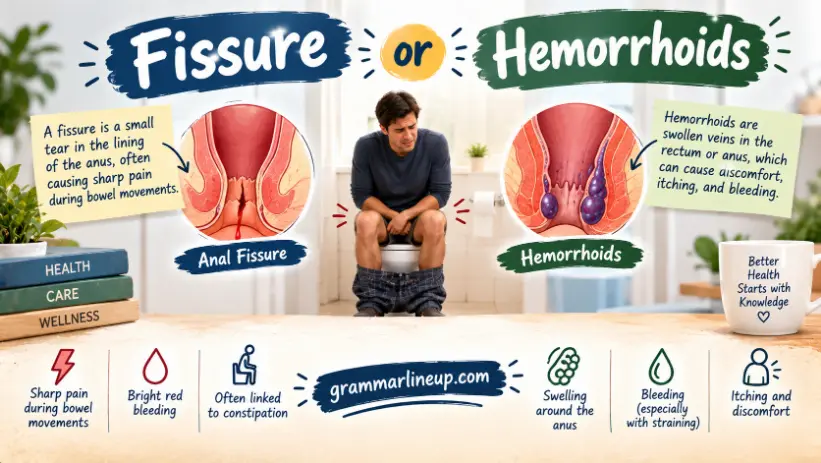
If you notice pain, itching, irritation, or a little blood after using the bathroom, it can be hard to know what is causing it. Two common possibilities are a fissure or hemorrhoids, and while they can share some symptoms, they are not the same condition.
A fissure is a small tear in the lining of the anus, often causing sharp pain during or after a bowel movement. Hemorrhoids, on the other hand, are swollen veins in or around the anus and may cause itching, discomfort, swelling, or bleeding.
Understanding the difference can make your symptoms less confusing and help you know what to discuss with a healthcare professional. In this guide, we’ll compare fissure or hemorrhoids in simple terms, including their symptoms, common causes, how they differ, and when medical advice may be important.
An anal fissure is a small tear in the lining of the anus, while hemorrhoids are swollen veins in or around the anus and lower rectum. Both can cause bleeding and discomfort, but a fissure typically causes sharp pain during or after a bowel movement. Hemorrhoids more often cause itching, swelling, lumps, or painless bleeding.
Fissure or Hemorrhoids: What’s the Difference?
The biggest difference is what is actually happening to the tissue.
An anal fissure is a small crack or tear in the lining of the anal canal. It commonly develops after passing a hard or large stool, constipation, or straining.
Hemorrhoids, sometimes called piles, are swollen and inflamed veins around the anus or in the lower rectum. They can be internal or external.
| Feature | Anal fissure | Hemorrhoids |
|---|---|---|
| What it is | A tear in the anal lining | Swollen veins/tissue |
| Typical pain | Often sharp, burning, or tearing | More common with external hemorrhoids |
| Pain during bowel movement | Very common | Variable |
| Pain afterward | Can continue for minutes or hours | Depends on the type |
| Bright-red bleeding | Possible | Common, especially with internal hemorrhoids |
| Itching | Possible | Common |
| Lump | Sometimes a small skin tag/lump | Common with external or prolapsed hemorrhoids |
| Common trigger | Hard stool, constipation, straining | Straining, constipation, prolonged toilet sitting, pregnancy and other pressure-related factors |
These symptoms overlap, so the table can help explain the difference but cannot diagnose a particular person.
What Does an Anal Fissure Mean?
An anal fissure is essentially a small tear in the tissue lining the anus.
Imagine a paper cut in a sensitive area. That comparison helps explain why even a relatively small fissure can hurt considerably.
A fissure often occurs when a person passes a hard or large stool or strains during a bowel movement. Persistent diarrhea, childbirth, and some inflammatory conditions can also contribute.
Common fissure symptoms
Typical symptoms include:
- Sharp pain during a bowel movement
- Burning or tearing pain afterward
- Bright-red blood on toilet paper or stool
- Anal muscle spasms
- A small lump or skin tag near the fissure in some cases
The pain may continue for some time after the bowel movement, which is an important clue when distinguishing a fissure from some types of hemorrhoids.
An acute fissure may heal on its own. A fissure that persists for more than eight weeks is generally considered chronic and may require additional medical treatment.
What Do Hemorrhoids Mean?
Hemorrhoids are swollen and inflamed veins around the anus or in the lower rectum. They are divided into two broad types: internal and external.
Internal hemorrhoids
Internal hemorrhoids develop inside the anus or lower rectum.
They often don’t cause pain unless they prolapse or develop a complication. One of the most recognizable symptoms is bright-red rectal bleeding, which may appear on toilet paper, stool, or in the toilet after a bowel movement.
External hemorrhoids
External hemorrhoids form beneath the skin around the anus.
They can cause:
- Itching
- Tenderness
- Swelling
- A noticeable lump
- Pain, particularly when sitting
A blood clot can also develop in an external hemorrhoid and cause a painful lump.
How Can You Tell a Fissure From Hemorrhoids?
Symptoms can provide clues, but they aren’t a reliable substitute for an examination.
Sharp pain points more toward a fissure
If the main symptom is sharp, cutting, or burning pain during a bowel movement, an anal fissure may be a possibility.
Fissure pain can also continue after you’ve finished using the bathroom.
Itching or a lump may point toward hemorrhoids
Itching, swelling, or a tender lump around the anus is commonly associated with external hemorrhoids.
Internal hemorrhoids, on the other hand, may cause bleeding without much pain.
Bleeding does not identify the condition by itself
Bright-red blood can occur with both fissures and hemorrhoids.
That’s why it isn’t safe to assume that every instance of rectal bleeding is simply a hemorrhoid. Other digestive conditions can also cause bleeding.
What Causes Fissures and Hemorrhoids?
There is considerable overlap in their triggers.
Common fissure triggers
Anal fissures can result from:
- Passing hard or large stools
- Constipation
- Straining during bowel movements
- Long-lasting diarrhea
- Childbirth
- Certain inflammatory or medical conditions
The basic problem is often trauma or excessive stretching of the anal lining.
Common hemorrhoid risk factors
Hemorrhoids may be associated with:
- Straining during bowel movements
- Chronic constipation or diarrhea
- Sitting on the toilet for long periods
- A low-fiber diet
- Pregnancy
- Aging
- Regular heavy lifting
These factors can increase pressure on the veins and tissues around the anus and rectum.
Fissure or Hemorrhoids: What Does the Pain Feel Like?
Pain is one of the more useful clues, although it still cannot establish a diagnosis on its own.
A fissure commonly produces sharp, tearing, cutting, or burning pain, particularly when stool passes over the tear. Pain may continue afterward.
Hemorrhoid pain varies according to the type. Internal hemorrhoids are often painless, while external hemorrhoids can cause soreness or significant tenderness.
A simple way to remember the distinction is:
Fissure = tear with characteristic bowel-movement pain.
Hemorrhoid = swollen tissue that may cause bleeding, itching, swelling, or a lump.
That shorthand is useful, but symptoms can overlap.
What Can Help at Home?
For mild symptoms, several measures may help reduce irritation and make bowel movements easier.
For both conditions, avoiding constipation and straining is important.
Helpful measures can include:
- Eating more fiber
- Drinking adequate fluids
- Avoiding prolonged sitting on the toilet
- Avoiding straining during bowel movements
- Taking warm baths or sitz baths for comfort
For hemorrhoids, the NIDDK also lists fiber supplements or stool softeners among possible home treatments and notes that some over-the-counter products can relieve mild itching, swelling, or pain.
For anal fissures, keeping stools soft and using warm-water baths may support healing. Persistent fissures can require prescription medication or other medical treatment.
When Should You See a Doctor?
Rectal bleeding deserves attention, particularly when the cause isn’t already established.
The NIDDK advises seeking medical help if hemorrhoid symptoms continue after about a week of home treatment or if you have rectal bleeding.
You should also seek medical attention for anal pain or bleeding rather than assuming you know the cause. Mayo Clinic specifically recommends evaluation when you experience pain during bowel movements or blood on the stool or toilet paper.
Seek urgent care for severe symptoms
Severe anal pain accompanied by significant rectal bleeding, particularly when there is abdominal discomfort, diarrhea, or fever, warrants prompt medical attention.
Large amounts of rectal bleeding accompanied by dizziness, lightheadedness, or fainting require emergency evaluation.
How Are Fissures and Hemorrhoids Diagnosed?
A healthcare professional may be able to diagnose either condition through a medical history and physical examination.
For hemorrhoids, the evaluation can include examination of the area around the anus and, when appropriate, a digital rectal examination or an anoscopy to inspect internal tissue.
Anal fissures are often visible during a gentle examination. If the symptoms or location suggest another underlying condition, additional testing may sometimes be appropriate.
This matters because rectal bleeding isn’t specific to hemorrhoids or fissures. Conditions involving the colon, rectum, or digestive tract can also cause bleeding.
Common Misunderstandings
“Any rectal bleeding must be hemorrhoids.”
Not necessarily. Hemorrhoids are a common cause of anal symptoms, but other digestive conditions can cause rectal bleeding too.
“A fissure and hemorrhoid are the same thing.”
No. A fissure is a tear, while a hemorrhoid involves swollen veins and supporting tissue around the anus or lower rectum.
“Hemorrhoids always hurt.”
No. Internal hemorrhoids are often painless, although they may bleed. External hemorrhoids are more likely to cause pain or tenderness.
“If the pain is severe, it must be a fissure.”
Not necessarily. Pain can have several causes, including complications of hemorrhoids and other anorectal conditions. Severe symptoms deserve professional evaluation rather than self-diagnosis.
Fissure or Hemorrhoids: Which One Is More Likely?
There isn’t a reliable way to determine the diagnosis from one symptom alone.
As a general guide:
- Sharp pain during or after bowel movements: more characteristic of an anal fissure.
- Bright-red bleeding with little or no pain: can occur with internal hemorrhoids.
- Itching and a tender external lump: can occur with external hemorrhoids.
- Bleeding plus severe or unusual symptoms: should be medically evaluated rather than automatically attributed to either condition.
Both conditions can occur in the same person, too. Their symptoms aren’t mutually exclusive.
FAQs:
Is a fissure worse than hemorrhoids?
Neither condition is automatically “worse.” Their severity varies from person to person. Fissures can cause substantial pain, while hemorrhoids can range from mild and temporary to more troublesome or complicated.
Can hemorrhoids cause sharp pain?
Yes, particularly external hemorrhoids or hemorrhoids with complications. However, sharp pain during and after bowel movements is also a characteristic symptom of an anal fissure.
Can a fissure cause bleeding?
Yes. An anal fissure can cause bright-red blood on toilet paper or stool, particularly after a bowel movement.
Can you have a fissure and hemorrhoids at the same time?
Yes. The conditions are different, but they can occur together, especially when constipation and straining contribute to irritation in the area.
Do fissures heal on their own?
Many acute anal fissures heal with conservative care, particularly when bowel movements are kept soft and straining is avoided. Persistent fissures may need medical treatment.
When should rectal bleeding be checked?
Rectal bleeding should not automatically be assumed to be hemorrhoids. Seek medical advice, especially if the bleeding persists, is significant, recurs, or occurs with severe pain, abdominal symptoms, fever, dizziness, or fainting.
Conclusion:
Fissure or hemorrhoids? The key difference is what causes the symptoms.
An anal fissure is a tear in the anal lining, while hemorrhoids are swollen veins and tissue around the anus or lower rectum. Fissures commonly cause sharp pain with bowel movements and may bleed. Hemorrhoids can cause bleeding, itching, swelling, lumps, or discomfort depending on their type.
Because these symptoms overlap—and because rectal bleeding can have other causes—persistent or unexplained symptoms are worth discussing with a healthcare professional.
This article is for general educational information and isn’t a diagnosis or a substitute for medical care.
