
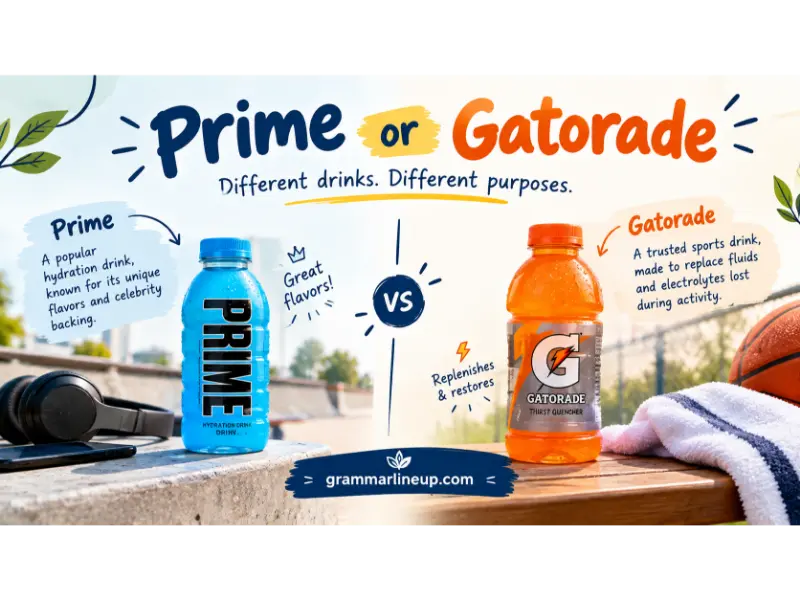
Choosing between Prime or Gatorade can be confusing, especially when both drinks are often linked with sports, exercise, and staying hydrated. While they may look like similar choices, Prime and Gatorade are designed with different ingredients, nutrition profiles, and purposes in mind. One may appeal more to people looking for electrolytes, while the other may be chosen for its flavour, lower sugar options, or modern branding.
Understanding the differences can make it easier to decide which drink fits a particular situation. Factors such as sugar, electrolytes, caffeine, calories, ingredients, and serving size can all matter depending on the product and version you are comparing.
It is also worth remembering that Prime and Gatorade have several varieties, so their nutritional values are not always the same.
In this guide, we will compare Prime or Gatorade in simple terms, look at their key differences, and explain what each drink is generally intended for.
Whether you are curious about the brands or simply deciding what to grab from the fridge, this comparison will help clear things up without making hydration feel like a science exam.
Featured Snippet Answer
PRIME Hydration and Gatorade are different sports-hydration products, not simply two versions of the same drink. PRIME Hydration emphasizes low calories, zero added sugar, coconut water, electrolytes, and caffeine-free hydration. Gatorade offers several formulas, including traditional carbohydrate-and-electrolyte drinks and zero-sugar options.
What Does “Prime or Gatorade” Mean?
The phrase “prime or gatorade” is not a slang expression or acronym with a special hidden meaning. In search queries, it usually refers to a comparison between PRIME and Gatorade, particularly their hydration drinks.
There is an important naming detail, though.
PRIME is a brand with multiple product categories, including PRIME Hydration and PRIME Energy. They should not be treated as interchangeable. Current PRIME Energy products list 200 mg of caffeine and are intended for adults, while PRIME Hydration products are caffeine-free.
Gatorade is also a broad product family. Its lineup includes traditional Gatorade Thirst Quencher, Gatorade Zero, Gatorlyte, Endurance products, and other formulations. Their nutritional profiles can be very different.
So, when someone asks “Prime or Gatorade?”, the useful question is really:
Which PRIME product and which Gatorade product are being compared, and what do you need the drink for?
Quick Answer: PRIME vs. Gatorade
For a simple comparison, look at the main differences rather than brand reputation.
| Factor | PRIME Hydration | Gatorade Thirst Quencher |
|---|---|---|
| Added sugar | Zero added sugar on current PRIME Hydration listings | Traditional formulas contain carbohydrates |
| Caffeine | Caffeine-free | Generally caffeine-free for standard Thirst Quencher |
| Electrolytes | Yes | Yes |
| Coconut water | Current PRIME Hydration products commonly include it | Not the defining feature |
| Carbohydrates | Relatively low | Higher in traditional Thirst Quencher |
| Main purpose | Hydration with low calories and no added sugar | Hydration plus carbohydrate fuel and electrolytes |
| Product range | Hydration and separate Energy products | Multiple hydration and sports-nutrition formulas |
PRIME’s current product pages list features such as zero added sugar, coconut water, B vitamins, BCAAs, antioxidants, electrolytes, and no caffeine, although nutrition varies among flavors and products.
Gatorade Thirst Quencher is specifically formulated around fluid, carbohydrates, sodium, and potassium. Gatorade’s own sports-performance materials list Thirst Quencher at 21 g carbohydrate and 160 mg sodium per 12 oz.
What Is PRIME Hydration?
PRIME Hydration is a sports-hydration beverage associated with the PRIME brand.
Current PRIME Hydration products vary somewhat by flavor, but official product listings commonly highlight:
- Zero added sugar
- Low calorie content
- Coconut water
- Electrolytes
- B vitamins
- BCAAs
- Antioxidants
- No caffeine
For example, the current PRIME Glowberry listing describes a 500 mL bottle with 25 calories and 30 mg sodium, while also highlighting coconut water and electrolytes.
That last point matters when comparing PRIME with traditional sports drinks: “zero added sugar” does not automatically mean “better for every workout.”
If someone is doing prolonged or intense exercise, carbohydrates can be useful as fuel. A low-carbohydrate hydration drink serves a different nutritional purpose from a carbohydrate-containing sports drink.
What Is Gatorade?
Gatorade is a sports-drink brand that began at the University of Florida in 1965. Researchers developed the original beverage to help football players replace fluids and electrolytes lost through sweating while also providing carbohydrate energy.
The brand has since expanded substantially.
For example, Gatorade currently offers:
- Gatorade Thirst Quencher
- Gatorade Zero
- Gatorlyte
- Gatorade Endurance products
- Powdered products
- Other specialized hydration products
This means it is misleading to discuss “Gatorade” as though every bottle has the same nutritional profile.
Gatorade Zero, for instance, is designed to provide electrolytes without added sugar, while traditional Thirst Quencher supplies carbohydrates as well as electrolytes.
Prime or Gatorade for Hydration?
Both brands sell products intended to support hydration, but their formulations approach that goal differently.
PRIME Hydration emphasizes low calories, zero added sugar, coconut water, and electrolytes. Some current PRIME Hydration products contain relatively little sodium compared with certain Gatorade formulations.
Gatorade has a broader range of electrolyte formulations. Its standard Thirst Quencher is designed to replace fluids and electrolytes while supplying carbohydrate energy. Gatorade Zero removes the added sugar while retaining significant sodium and potassium.
For ordinary daily hydration, plain water can also be entirely appropriate. Sports drinks become more relevant when fluid, electrolyte, or carbohydrate needs increase because of activity, heat, or prolonged exercise.
Prime or Gatorade for Workouts?
The answer depends heavily on how long and how intensely you exercise.
For shorter or less demanding activity, you may not need a carbohydrate-containing sports drink at all.
For longer or higher-intensity sessions, carbohydrates and sodium can become more relevant. Gatorade specifically describes Thirst Quencher as suitable during and after prolonged or high-intensity exercise and provides both carbohydrates and electrolytes.
PRIME Hydration can still provide fluids and electrolytes without the added sugar found in traditional sports drinks. But its lower carbohydrate content means it should not automatically be treated as a one-for-one replacement for a carbohydrate-focused sports drink during long endurance activity.
The important distinction is function, not branding.
Sugar and Carbohydrates: A Major Difference
One of the biggest differences people notice is sugar.
Current PRIME Hydration products are marketed as having zero added sugar. Some current listings show around 20–25 calories per bottle, depending on the product.
Traditional Gatorade Thirst Quencher, by contrast, contains carbohydrate. Gatorade’s performance materials list 21 grams of carbohydrate per 12 oz for Thirst Quencher.
That difference should not automatically be interpreted as “more sugar is bad” or “zero sugar is better.”
During prolonged exercise, carbohydrate can serve a practical purpose by helping fuel working muscles. Gatorade explicitly formulates some products around that function.
For someone simply wanting a flavored drink without added sugar, a low-calorie product may make more sense.
The goal determines what nutritional profile is useful.
Electrolytes: What Actually Matters?
Electrolytes are minerals involved in fluid balance and other body functions. During sweating, the body loses electrolytes, particularly sodium.
But electrolyte quantity varies dramatically between products.
Current PRIME Hydration listings show electrolytes but can have relatively modest sodium levels; one current 500 mL PRIME product lists 30 mg sodium.
Gatorade’s products range from standard sports drinks to specialized electrolyte formulas. Gatorade Zero powder, for example, lists 270 mg sodium and 80 mg potassium per serving, while Endurance Gatorlytes provide much higher electrolyte amounts for situations involving substantial electrolyte losses.
So instead of asking:
“Which brand has more electrolytes?”
look at the specific bottle or packet’s nutrition label.
PRIME Hydration vs. PRIME Energy
This is one of the easiest mistakes to make when searching for “prime or gatorade.”
PRIME Hydration and PRIME Energy are different products.
PRIME Hydration products are advertised as caffeine-free.
Current PRIME Energy products, however, list 200 mg of caffeine and are labeled for adults 18+.
That creates a completely different comparison:
- PRIME Hydration vs. Gatorade: primarily a hydration comparison.
- PRIME Energy vs. Gatorade: involves caffeine and energy-drink considerations as well.
If someone says they want “Prime,” always check whether they mean PRIME Hydration or PRIME Energy before comparing nutrition.
When PRIME Hydration May Make Sense
PRIME Hydration’s current formulation may appeal to someone who wants:
- A flavored hydration drink without added sugar
- A low-calorie alternative to traditional sugary sports drinks
- Electrolytes without caffeine
- A drink containing coconut water
- A beverage for everyday active routines
Those characteristics come directly from current PRIME product listings, though formulas can change by flavor and over time.
That does not mean PRIME Hydration is automatically appropriate for every athletic situation. Someone exercising for a long period may have different carbohydrate and sodium requirements.
When Gatorade May Make Sense
Traditional Gatorade Thirst Quencher is specifically formulated to provide fluid, electrolytes, and carbohydrate energy.
Gatorade’s current guidance identifies Thirst Quencher for prolonged or high-intensity exercise, while its specialized Endurance products provide additional electrolyte support for longer events.
Gatorade also offers zero-sugar choices.
So someone who likes the Gatorade formulation but wants to avoid added sugar can look at Gatorade Zero rather than assuming every Gatorade product contains the same amount of sugar.
Common Misunderstandings
“PRIME and Gatorade are basically the same.”
Not exactly. Both brands sell hydration products, but their formulations can differ substantially in carbohydrates, sodium, calories, and other ingredients.
“Zero sugar means better hydration.”
Not necessarily.
Sugar content is only one part of a hydration formula. Sodium, fluid volume, carbohydrate needs, exercise duration, and sweat losses can all matter.
“All Gatorade has lots of sugar.”
That is too broad. Traditional Thirst Quencher contains carbohydrates, but Gatorade also sells products such as Gatorade Zero that contain zero sugar.
“All PRIME drinks are caffeine-free.”
No. PRIME Hydration is caffeine-free, but current PRIME Energy products contain 200 mg of caffeine per can.
“More electrolytes automatically means better.”
Not necessarily. Different electrolyte levels are designed for different situations, and the relevant needs depend on activity and sweat losses.
Similar Search Terms and Alternatives
People searching “prime or gatorade” may also use phrases such as:
- Prime vs Gatorade
- PRIME Hydration vs Gatorade
- Is Prime better than Gatorade?
- Is Prime the same as Gatorade?
- Prime or Gatorade for sports
- Prime or Gatorade for workouts
- Prime vs Gatorade electrolytes
- Prime vs Gatorade sugar
- Prime Hydration vs Gatorade Zero
- Prime Energy vs Gatorade
- Which has more electrolytes, Prime or Gatorade?
These searches are related, but they do not always ask the same question. A sugar comparison, for instance, is different from a question about hydration during a two-hour workout.
FAQs:
Is Prime the same as Gatorade?
No. PRIME Hydration and Gatorade are separate brands with different product formulations. PRIME Hydration generally emphasizes low calories, zero added sugar, coconut water, and electrolytes, while Gatorade offers products containing different combinations of carbohydrates, sodium, potassium, and other electrolytes.
Does Prime have electrolytes?
Yes. PRIME Hydration products contain electrolytes. However, the amounts vary by product and flavor, so checking the specific nutrition label is important. A current PRIME Hydration listing, for example, highlights electrolytes and lists 30 mg sodium per 500 mL bottle.
Does Gatorade have more sugar than Prime?
Traditional Gatorade Thirst Quencher generally contains substantially more carbohydrate than current PRIME Hydration products. Gatorade’s performance materials list 21 g of carbohydrate per 12 oz for Thirst Quencher, while current PRIME Hydration products are marketed with zero added sugar.
Is Prime or Gatorade better for exercise?
There is no universal answer. The useful choice depends on the exercise duration, intensity, sweat losses, and whether you need carbohydrate fuel. Traditional Gatorade Thirst Quencher is specifically formulated with carbohydrates and electrolytes for prolonged or intense activity, while PRIME Hydration is a lower-calorie, zero-added-sugar hydration option.
Does Prime contain caffeine?
PRIME Hydration is caffeine-free. However, PRIME Energy is a different product category and current products list 200 mg of caffeine per can.
Did Gatorade come before Prime?
Yes. Gatorade was developed at the University of Florida in 1965. PRIME Hydration was introduced decades later as part of the PRIME brand. Gatorade’s own history identifies 1965 as the year of its development.
Final Takeaway:
“Prime or Gatorade” is best understood as a product-comparison search, not a question with one universal answer. PRIME Hydration and traditional Gatorade have different nutritional profiles and can serve different purposes.
If your priority is low calories and zero added sugar, PRIME Hydration offers that profile in many current products. If you need carbohydrates alongside fluids and electrolytes during prolonged or intense activity, traditional Gatorade Thirst Quencher is formulated for that purpose. Gatorade also has zero-sugar and specialized electrolyte products, so the exact product matters.
The most reliable way to compare the two is to ignore the branding for a moment and check the specific label for calories, carbohydrates, sugar, sodium, potassium, caffeine, and serving size. Formulas can change, and two drinks from the same brand may be designed for very different uses.
